Hand Surgery Device | Product Design
Overview
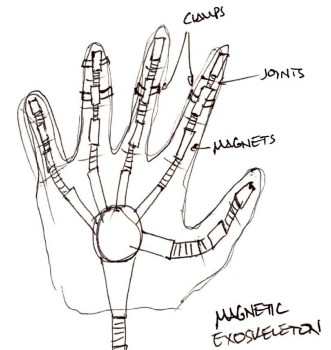
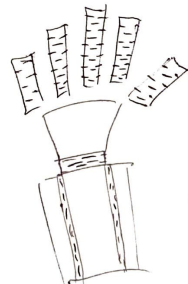
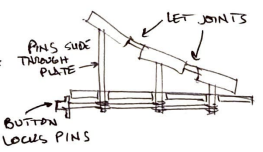
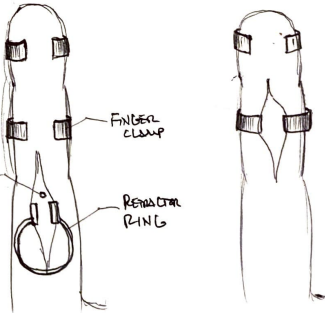
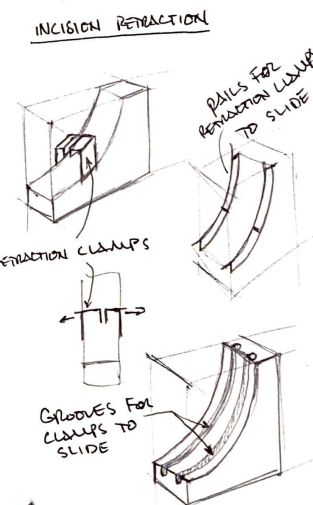
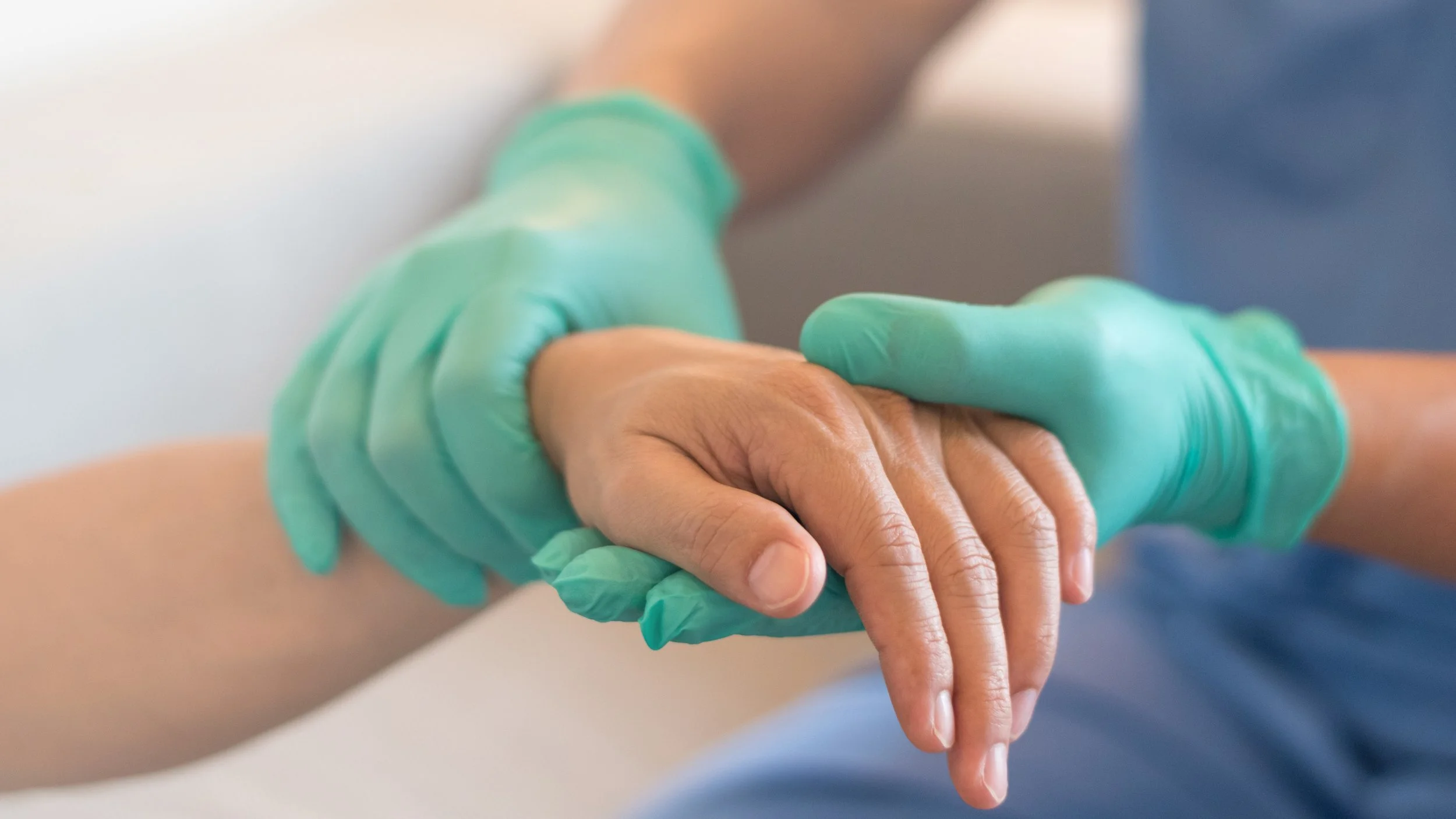
As part of a Product Design class I took during the fall 2024, I was given a conceptual design project. In 20 hours I was to discover a problem worth solving for a group of my choice and provide a conceptual solution to that problem using only hand sketching. I chose to investigate people who work in hospitals and came up with the HandHold, a surgical supportive device that assists surgeons in fixturing the human hand in various positions during surgery.
Design Process
There are many approaches to design. Here’s what I chose to do for this project.
Engage with stakeholders, customers, and end users
Identify common themes
Concept generation and design space exploration
Protototyping
Seek feedback and iterate until time or resources are gone
Present final design in a transferrable format
Engagement
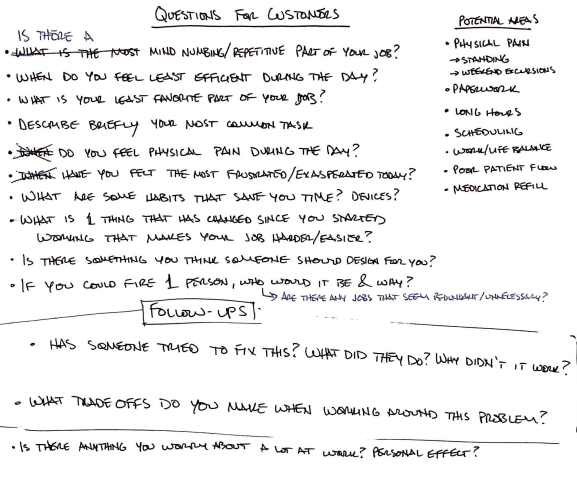
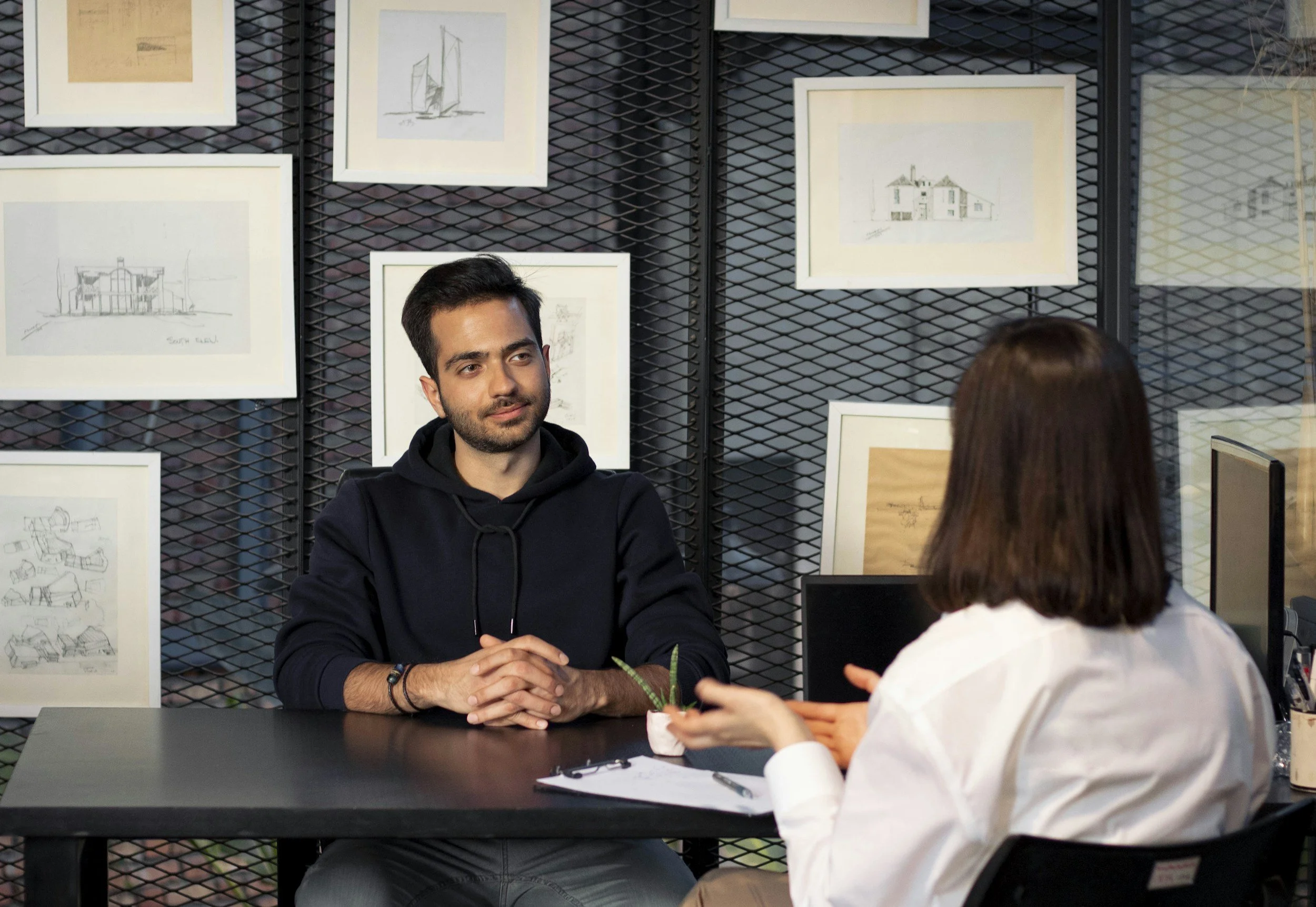
I chose to investigate people who work in hospitals. From this broad group, I was able to talk with several surgeons, a nurse, and a couple medical students. Here are some of the notes I took that are more specifically focused on pain points.
-
They spend a lot of time closing wounds
Writing orders for patient care is tedious, and not all orders are followed correctly
Lots of neck and back pain from standing in a bent over position for hours at a time
Positioning a patient correctly during surgery is difficult, especially for operations on the neck or hand
Orthopedic implants have a finite life due to wear between components
The saline supply chain is fragile
-
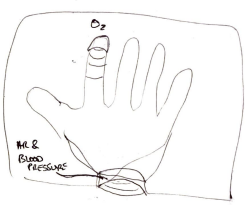
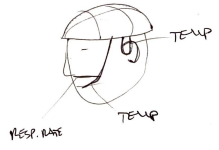
Taking patient vitals can be time consuming, especially because multiple pieces of equipment in different locations are needed
Blood draws are often stressful for patients and nurses
Lifting vaccine boxes, which are heavy due to their refrigeration equipment, is physically demanding and even painful at times
Long hours and feeling overworked are common experiences for many nurses
-
It can be frustrating to work with patients who don’t care about their health and simply want a prescription
All the red tape in health care, often due to insurance companies, can be cumbersome to deal with
Some common tests seem too subjective (tuning fork vibration test, monofilament sensation test, etc.)
Examining babies’ and children’s mouths can be difficult
Holding assistive devices for a surgeon for long periods of time can be physically painful
Taking notes physically and digitally seems inefficient

Identify Themes and Explore Design Space
I generated potential How Might We (HMW) Statements based on the themes I noticed in my interviews, then I ideated on the most promising topics
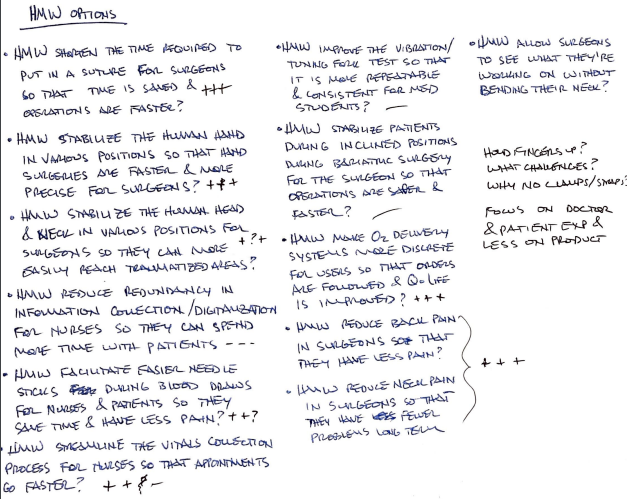
How Might We (HMW) statements based on common themes in interviews
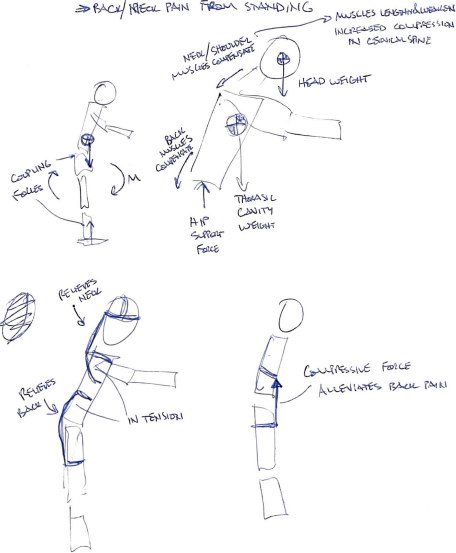
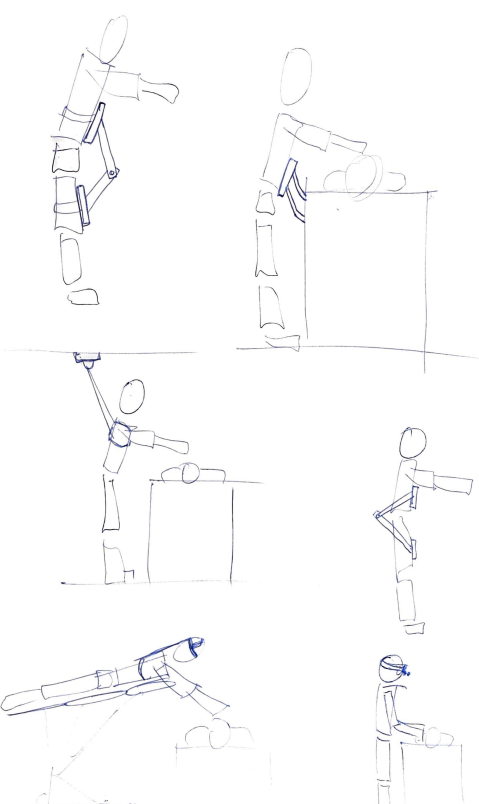
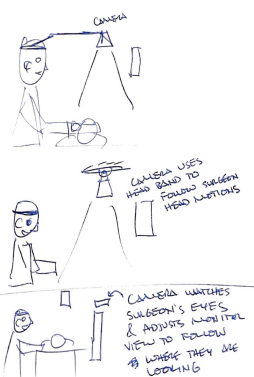
Exploring solutions to surgeon neck and back pain
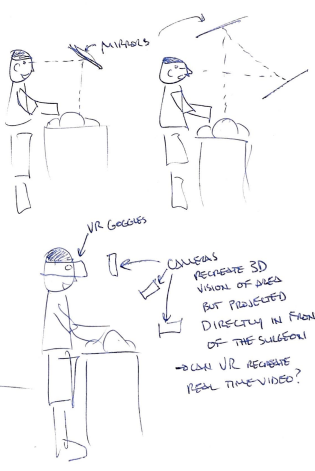
How could I help surgeons see without craning their necks?
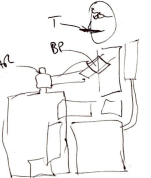
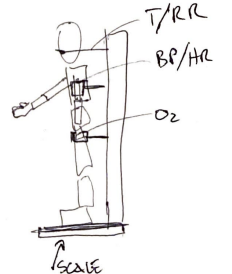
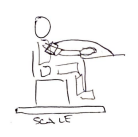
Ideating on taking patient vitals simultaneously
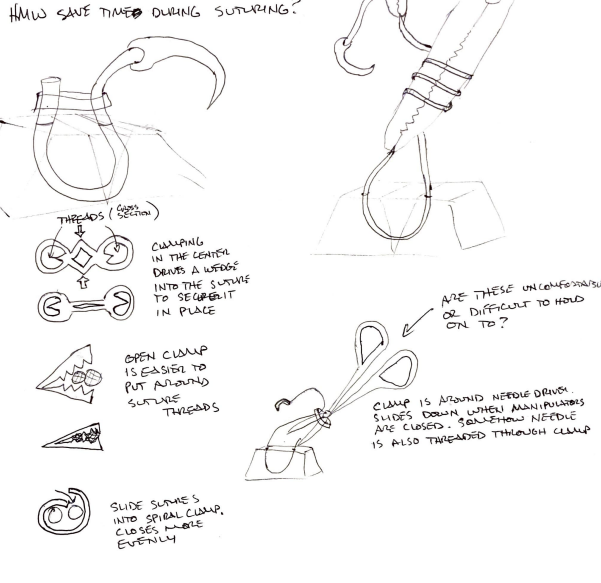
Could I help reduce the time required to tie a suture?
Pivot and Iterate
After an interview with a biomedical expert, I decided to focus on stabilizing the human hand during surgery. Here’s the HMW statement I used to guide my design decisions:
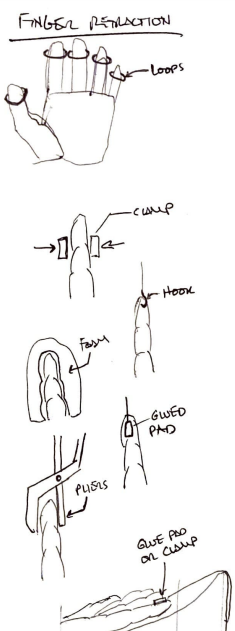
How might we stabilize the human hand in various positions for hand surgeons so that surgeries are faster, more precise, and can be conducted with minimial outside assistance?
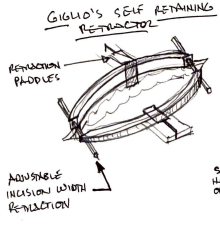
I started by looking at the competing products in this area.
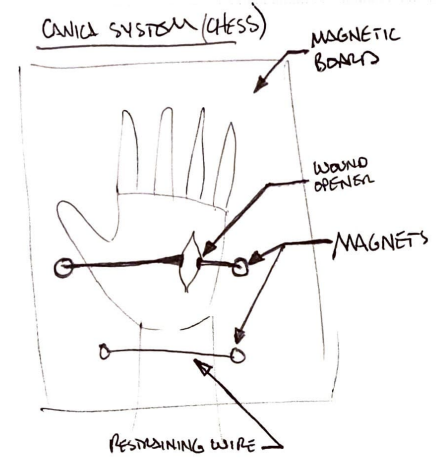

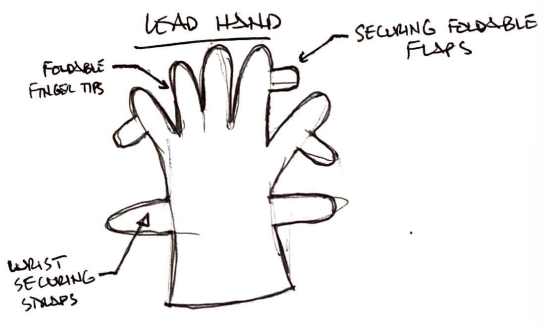
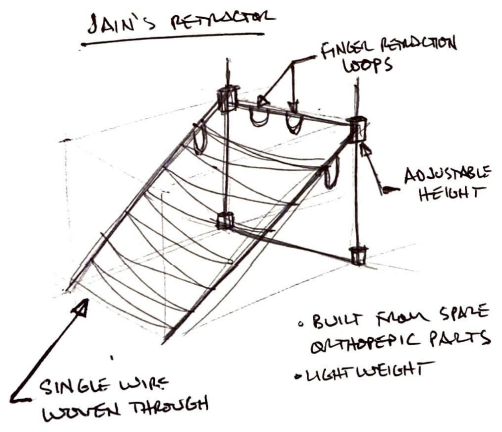
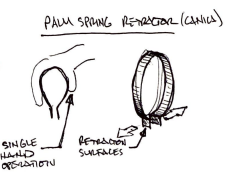
Theme Identification and Ideation
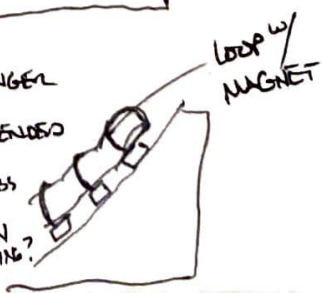
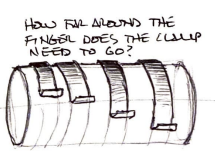
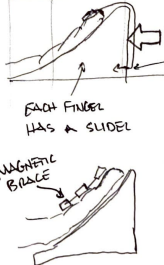
I started ideating based off of common themes I saw in competing products. Here are a few of the ideas I came up with.